


Ceramic dental implant clinical case studies
Posterior restoration in augmented alveolar bone
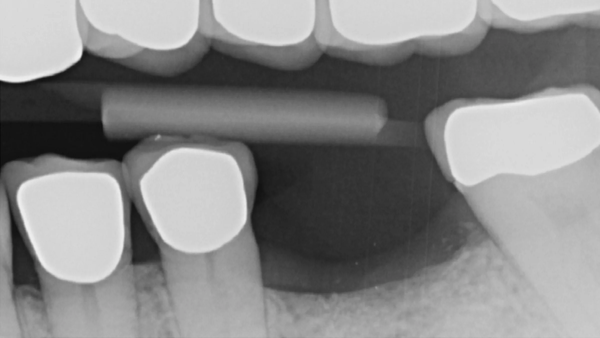
After regeneration of the augmented jaw in region 36, the treatment team met the patient’s request for treatment with a ceramic implant.
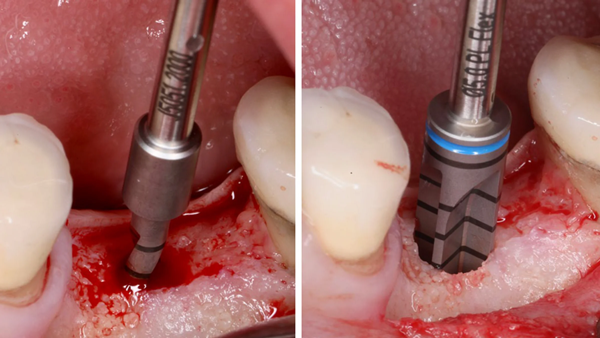
The implant position was marked using a round bur, and the
implant site was prepared according to the drilling protocol for
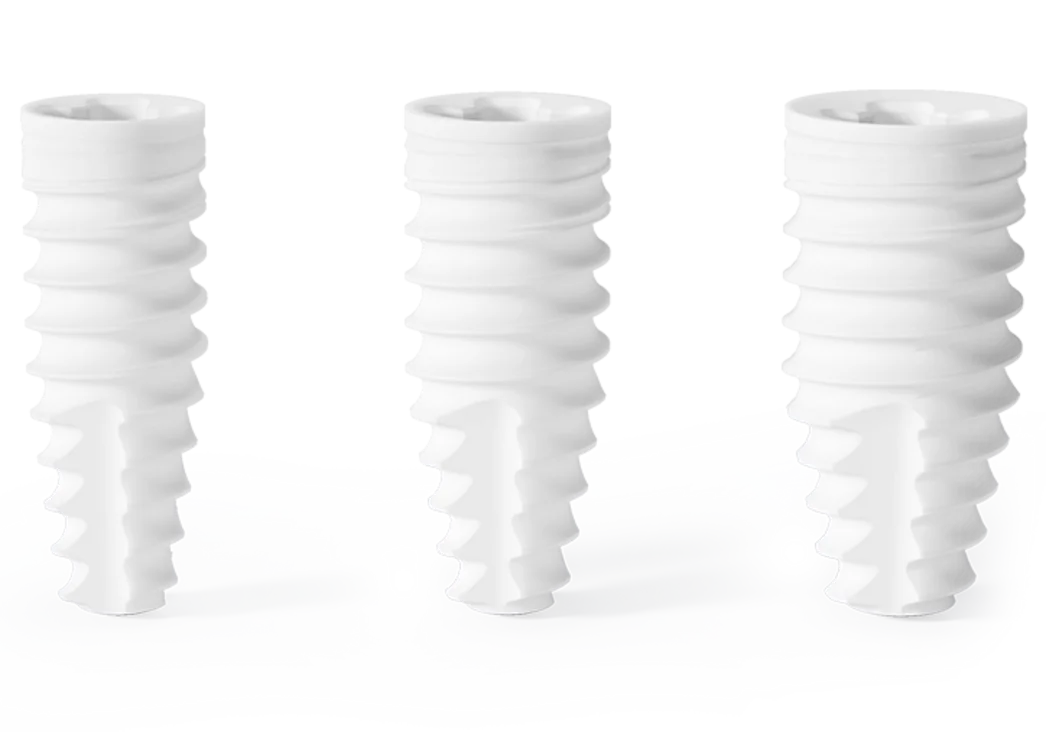
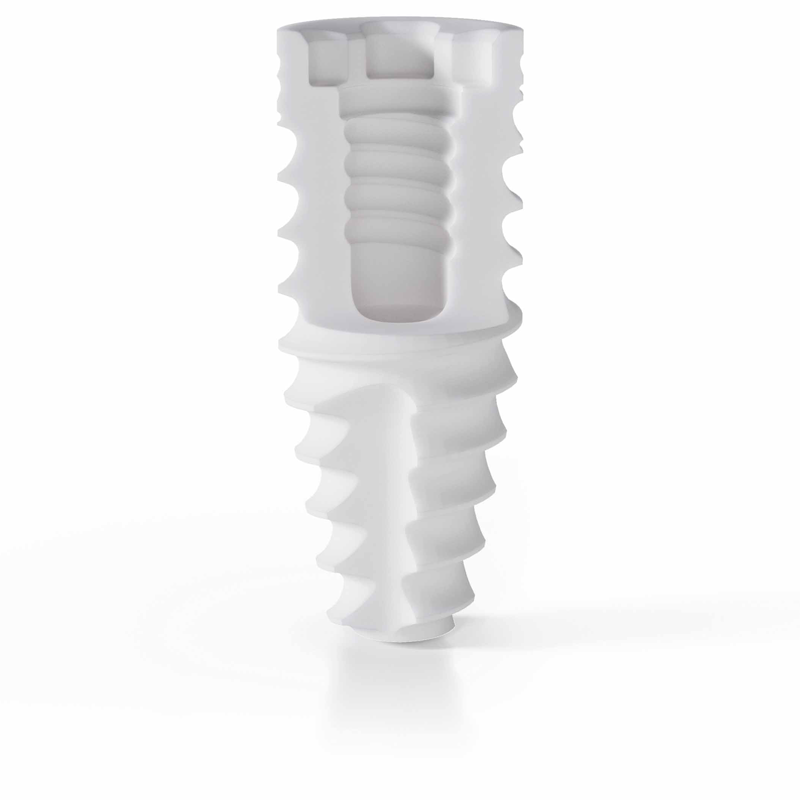
a CERALOG PROGRESSIVE-LINE implant (Ø 5.0 mm / L 9 mm).
implant site was prepared according to the drilling protocol for
a CERALOG PROGRESSIVE-LINE implant (Ø 5.0 mm / L 9 mm).
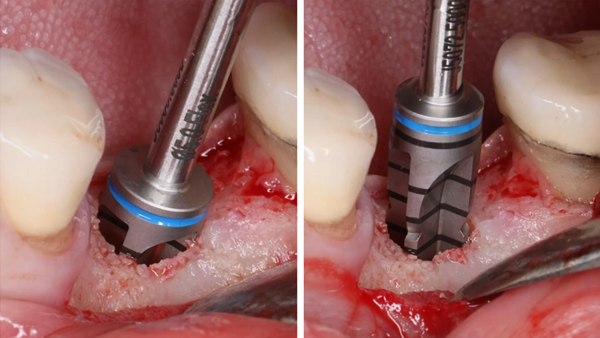
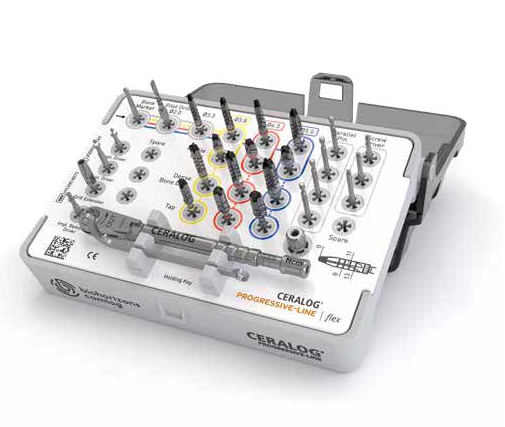
To avoid pressure on the crestal bone, the use of the profile drill
shown on the left is essential. The dense bone drill is used in D1
and D2 bone types and enables positionally stable implant insertion.
shown on the left is essential. The dense bone drill is used in D1
and D2 bone types and enables positionally stable implant insertion.
Dr. Frederic Hermann, M.Sc., Zug (Switzerland)
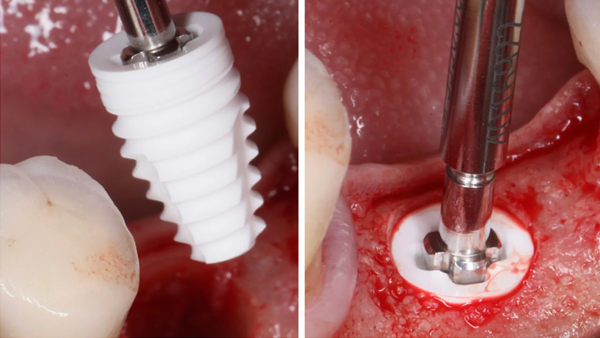
The implant is removed from the sterile packaging using a direct
pick-up and inserted at ≤ 15 rpm to prevent bone necrosis due
to overheating. The implant is placed in the jawbone with an
insertion torque of approx. 25 Ncm.
pick-up and inserted at ≤ 15 rpm to prevent bone necrosis due
to overheating. The implant is placed in the jawbone with an
insertion torque of approx. 25 Ncm.
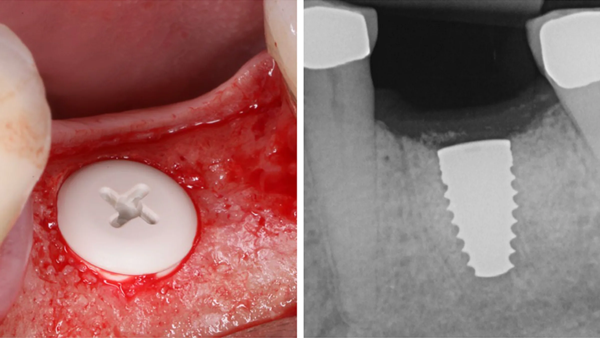
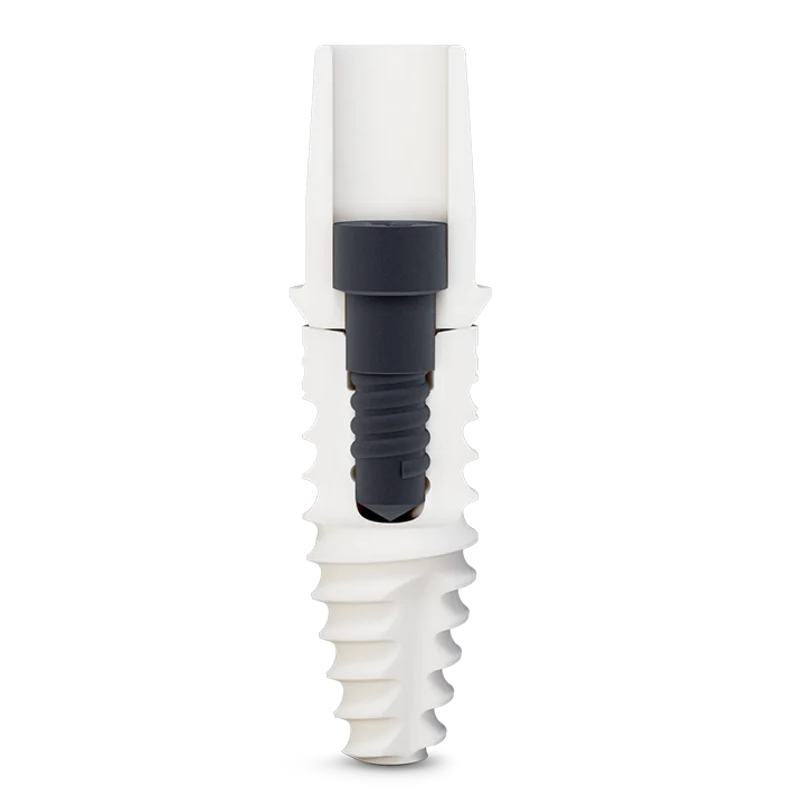
The smooth collar of the CERALOG PROGRESSIVE-LINE implants
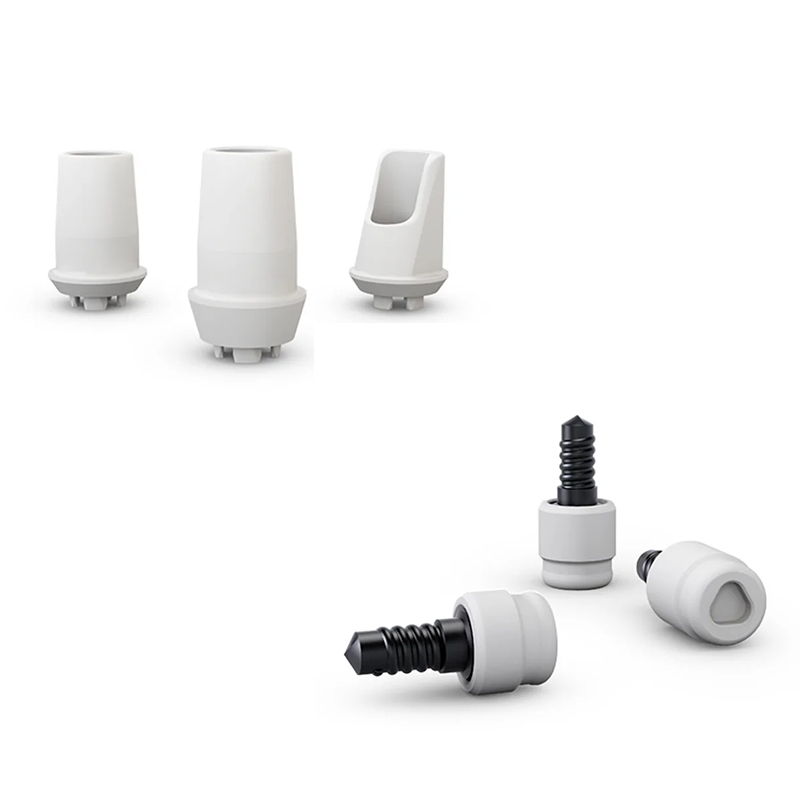
is positioned around 0.4 mm supracrestally. Crestal-level placement, as performed in this case study, is possible. The PEEK
cover screw completely conceals the implant shoulder.
is positioned around 0.4 mm supracrestally. Crestal-level placement, as performed in this case study, is possible. The PEEK
cover screw completely conceals the implant shoulder.
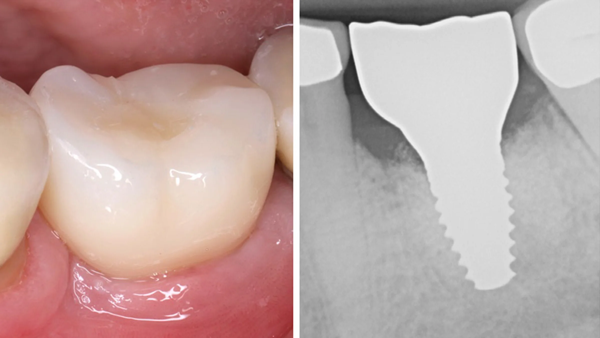
After uneventful healing, the final restoration was placed six
months after implant placement. The concave design of the restoration in the submucosal region helps form a stable soft-tissue
cuff. (Dental lab work: Nicola Lanfranconi AG, Zurich, Switzerland)
months after implant placement. The concave design of the restoration in the submucosal region helps form a stable soft-tissue
cuff. (Dental lab work: Nicola Lanfranconi AG, Zurich, Switzerland)
Additional information
1. Jank S, Hochgatterer G. Success Rate of Two-Piece Zirconia Implants: A Retrospective Statistical Analysis. 2016 Apr;25(2):193-8. doi:10.1097/ID.0000000000000365.